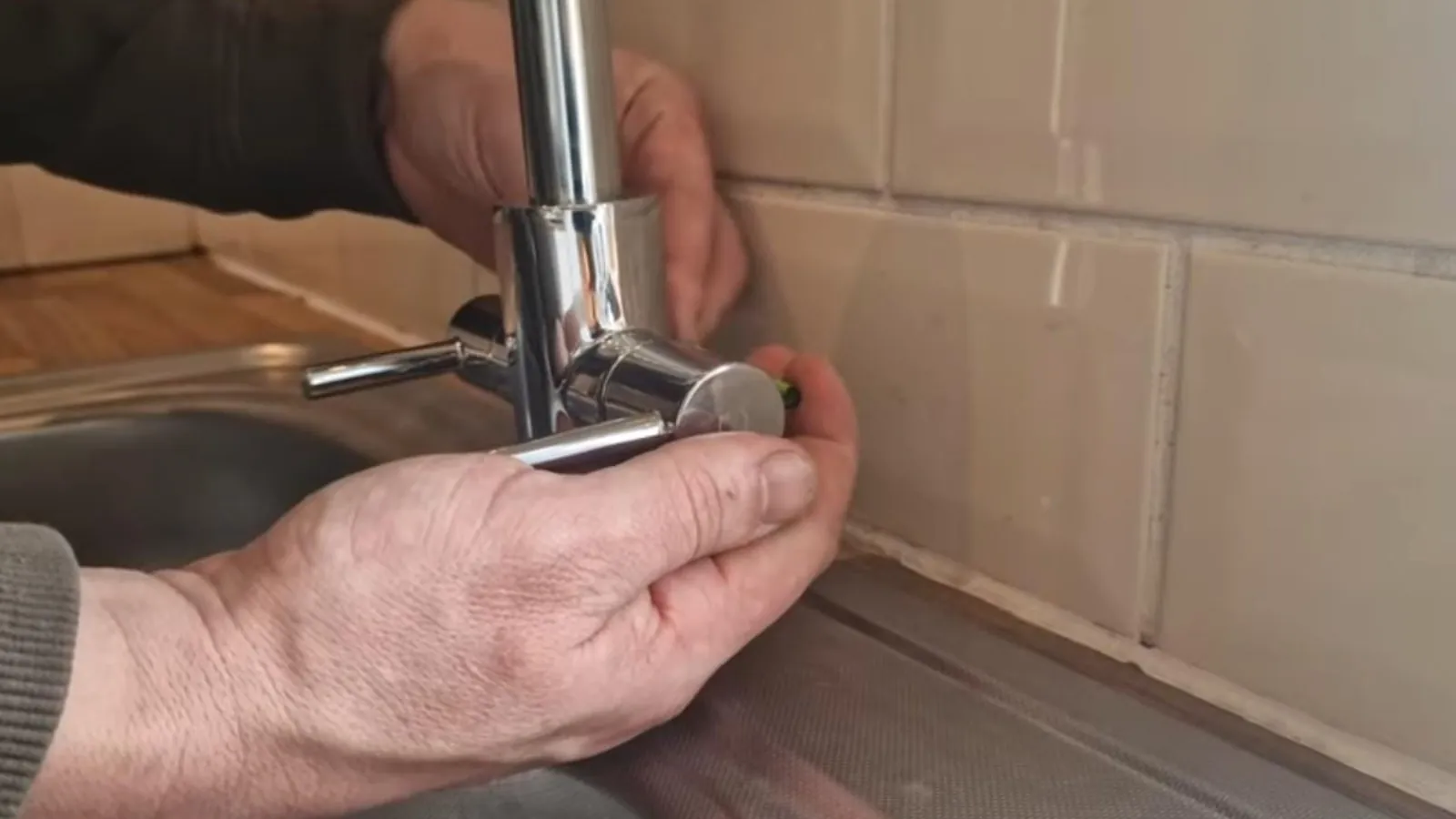
When a faucet or valve leak is an emergency
A dripping faucet is annoying. A faucet that will not shut off, a burst supply line or a shower valve that sprays inside the wall is an emergency. The stop valve is the first defense, and if it fails, the house main is next.
Water that runs inside a wall can saturate drywall within hours. If you hear running water with every faucet closed, check the shutoffs and the meter, and if the leak continues, call for leak detection too.
We answer faucet and valve emergencies 24/7 and carry common cartridges, stops and supply lines on the truck.
Faucet and valve problems we see most
Each symptom points to a different part.
- Drip from the spoutA worn cartridge, seat or O-ring lets water pass when the faucet is closed.
- Leak around the handleA worn packing or cartridge seal leaks at the stem.
- Water under the sinkThe supply line, compression fitting or the faucet base may be leaking.
- Low flow at one faucetA clogged aerator or a partly closed stop valve restricts flow.
- Tub faucet that will not stop drippingA tub spout or valve cartridge has worn out, and the repair is inside the wall.
Shutoff valves and supply lines: small parts, big floods
Under every sink and behind every toilet sits a shutoff valve. Older multi-turn valves seize with mineral buildup or leak at the stem, and old braided supply lines can burst without warning. These are inexpensive parts that prevent expensive floods.
When we replace a faucet, we usually replace the shutoff and the supply lines at the same time, because you do not want to be back under the sink in a year.
A burst supply valve is covered in our burst pipe repair page for lines larger than a fixture connection.
Repair the faucet or replace it
A simple decision tree helps.
| Condition | Usually repair | Usually replace |
|---|---|---|
| Single drip | New cartridge or seat. | If the faucet is corroded or parts are unavailable. |
| Chrome or finish peeling | Not repairable. | Yes. |
| Handle leak | New packing or cartridge. | If the body is cracked. |
| Old multi-turn stops under the sink | Replace the stops. | Replace with quarter-turn valves. |
| Frequent repeat repairs | One more repair if parts are cheap. | If you are paying for the third repair. |
Shower and tub valves: the repair behind the wall
Showers and tubs have a mixing valve inside the wall. When the cartridge fails, the handle may drip, the temperature may swing or the tub may leak from the spout. Some valves can be repaired from the front with a new cartridge. Others need access through the wall.
We try the front-access repair first. If the valve body is corroded or an old model, we open the wall from the least visible side, replace the valve and patch the opening. We also look for signs of earlier leaks.
Lenexa has adopted the 2018 International Plumbing Code (IPC), which sets rules for water temperature control valves in showers, and we follow it on valve replacements.
What drives faucet and valve repair cost
Small jobs get clear prices before we start.
A sudden supply line failure that floods a floor is often a covered loss. A slow drip that rots a cabinet may not be, so repair drips promptly.
Want your real number? Call (855) 575-2890.
Questions homeowners ask
Yes. We dispatch 24/7 for faucets that will not shut off, burst supply lines and seized valves. Close the stop valve or the main and call.
The valve seat may be pitted, or the cartridge may be worn. Both are fixable.
Often yes, if only the spout or cartridge is bad. A failed valve body needs wall access.
It is usually on the supply pipes under the sink or behind the toilet. Turn it clockwise to close.
Yes. They age and can burst, and replacing them is inexpensive compared with water damage.
Yes. Bring the model number and we will check that it fits, or we supply one.
Not sure whether to repair or replace the fixture? Tell us the age and what it is doing. (855) 575-2890, any hour.