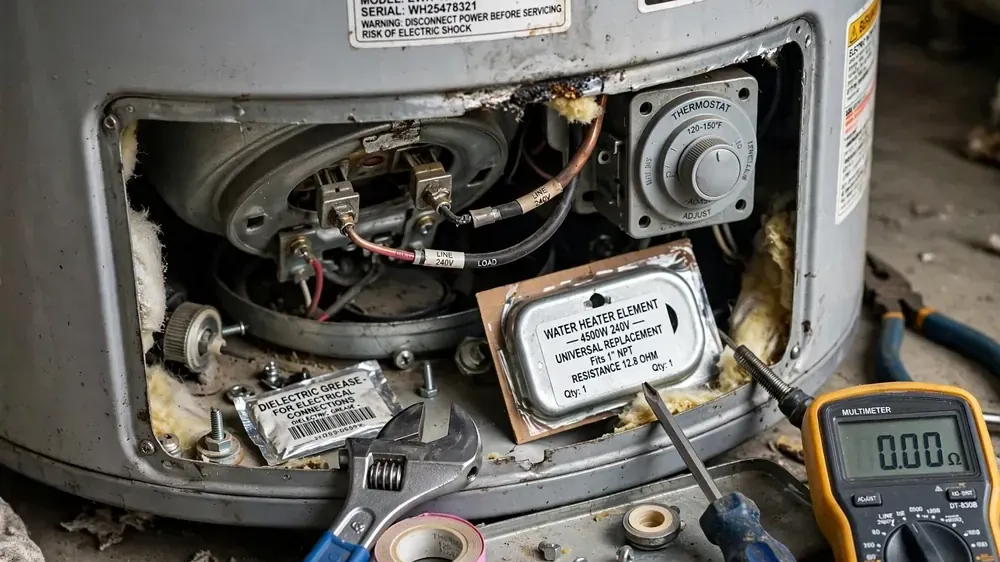
Water heater emergency: what to do before we arrive
Keep this short list handy. It limits damage while the crew drives out.
- For a gas heater, check for gas odor. If you smell gas, leave the house and call 911 and your gas utility before calling us.
- If water is on the floor, close the cold water valve on top of the tank. The valve handle sits on the pipe feeding the tank.
- For an electric heater that is leaking, switch off its breaker before anyone stands in wet areas near it.
- Move boxes and stored items off the basement floor around the heater, then run a wet vacuum if the floor allows it.
- Photograph the tank label with model and serial number. It tells us the tank age and the parts we need.
Why a gas water heater stops making hot water
Gas tanks fail in a short list of ways. A pilot or igniter that will not stay lit, a thermocouple that has weakened, a dirty burner, or a failed gas control valve all leave you with cold water. Thermostat problems on the gas valve cause water that is lukewarm or too hot.
We test the flame, check the venting for blockage, and measure gas pressure at the control before touching parts. A heater with a clean burner and a good thermocouple but no flame points to the control valve, which often costs more than a gas heater is worth on an old tank.
Lenexa has adopted the 2018 International Fuel Gas Code, so gas connections and venting must meet that code. We follow it on any repair that touches the gas train or flue.
Electric tanks: elements, thermostats and tripped breakers
Electric heaters usually lose heat because an upper or lower element has burned out, a thermostat has failed, or the high limit reset has tripped. We test each with a meter rather than swapping parts.
A burned element is a modest repair on a sound tank. If the lower element is coated with scale and the tank interior sounds crusty when drained, we talk about replacement instead, since sediment signals the tank is near the end.
Repair or replace: a quick comparison
This is the framework we walk through with homeowners on site.
| Situation | Usually repair | Usually replace |
|---|---|---|
| Tank age | Under about 8 years, no leaks. | Past about 10 to 12 years, with rust-colored water. |
| Symptom | Pilot, igniter, element, thermostat. | Leak from the tank body or rusted base. |
| Water quality | Clean when drained. | Heavy sediment or crusty drain flow. |
| Cost pattern | One modest part. | Second repair in a year or a control valve on an old gas tank. |
Age ranges are general guidance. We confirm the tank date from its serial number.
No hot water, rumbling noises and other signs of failure
These symptoms narrow the cause quickly.
- Rumbling or popping from the tankSediment baked onto the bottom is boiling water trapped under it. A flush can help if the tank is young.
- Water that is warm but never hotA failing lower element on an electric heater or a weak thermocouple on gas often shows this way.
- Hot water runs out fastA broken dip tube mixes cold water at the top of the tank, so the usable volume drops.
- Moisture around the baseCheck fittings first. If the tank itself is weeping, repair will not hold.
- Rust-colored hot waterRust in hot water only, not cold, points to the tank interior or a spent anode rod.
Hybrid, heat pump and tankless repairs
Hybrid and heat pump water heaters add a compressor, fan and condensate line to a standard tank, and each needs a different diagnosis. We check airflow, condensate drainage and error codes before recommending parts.
Tankless units fail from scale, flow sensor faults and venting problems. Our tankless water heater page explains flushing and descaling, which is the most common fix.
What drives the cost of a water heater repair
You get a price before we start. Four things shape it.
Home insurance generally covers sudden water damage from a failed heater but not the heater itself, so document the damage with photos if water reaches the floor.
Want your real number? Call (855) 575-2890.
Questions homeowners ask
Yes. We take water heater emergency calls 24/7 in Lenexa, including leaks, no-heat failures, and gas-related shutdowns. Call and tell us whether the tank is gas or electric.
Close the cold water valve above the tank first. For an electric unit, switch off its breaker. For gas, turn the control to off or pilot, unless you smell gas, in which case leave the home and call 911.
Many repairs finish in one visit when we carry the part. A control valve, tankless board or specialty element may need a short return trip.
Yes. The serial number on the rating label encodes the manufacture date, and we read it on arrival so we can judge repair against replacement.
Yes. We repair and flush tankless units, which includes clearing scale from the heat exchanger and checking the vent and flow sensor.
Permit rules depend on the work. Ask the Lenexa Community Development office at 913-477-7725 or permits@lenexa.com before any replacement that changes gas, venting or relief piping.
Unsure whether to repair or replace? Share the tank age and symptoms, and we will give you a straight answer. (855) 575-2890, any hour.