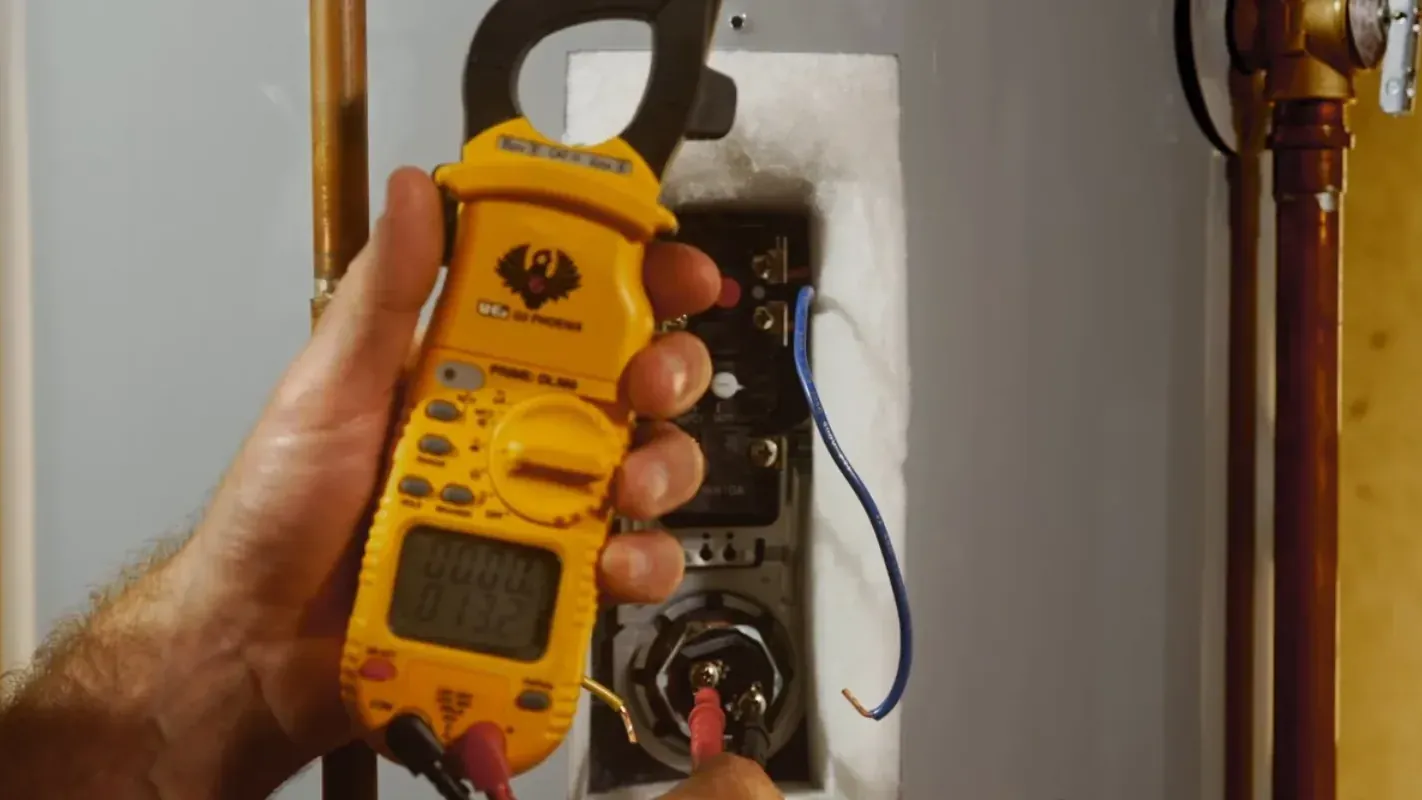
What the thermostat on a gas water heater actually is
People say thermostat, but on most residential gas heaters the dial you turn is part of a combined gas control valve. That one part senses tank temperature, opens and closes the gas to the burner and holds the pilot safety. If one function fails, the whole valve is usually replaced as a unit.
Electric heaters are different, with separate thermostats inside access panels. Do not follow electric heater advice on a gas model, because gas parts need different handling and a leak can be dangerous.
A gas heater also has a thermocouple or flame sensor that proves the pilot is lit. Many "thermostat" complaints turn out to be a worn thermocouple or a dirty pilot, and those are much cheaper repairs.
Symptoms and what they usually mean
Match what you see before you decide on a repair.
- Water too hot even at the lowest settingThe control valve may not be shutting off the burner. Turn the dial down and call, since overheated water can scald.
- Lukewarm or cold water, burner runningA failed dip tube, heavy sediment or a weak burner can cause this, so the thermostat may not be to blame.
- Burner does not light, pilot is outA bad thermocouple or a draft is common. A pilot that will not stay lit after a new thermocouple points to the valve.
- Dial feels loose or does not change the temperatureThe valve may have failed internally.
- Gas smell near the heaterLeave the house and call the gas utility from outside. Do not try to fix it yourself.
Before you touch anything: safety steps
These steps apply to every gas heater problem.
- If you smell gas, do not flip switches or use a lighter. Leave and call your gas utility and 911 from outside.
- Turn the gas control dial to pilot or off and close the gas shutoff on the supply line only if you can do it safely.
- Never bypass or tape over a safety device to get hot water back.
- Check the temperature setting. Many manufacturers suggest 120 degrees Fahrenheit as a safe starting point, so read the label on your tank.
- Photograph the data label with the model and serial number before you call.
Thermostat, thermocouple or whole heater
This table compares the likely repairs.
| Problem | Likely part | Repair or replace |
|---|---|---|
| Pilot keeps going out | Thermocouple or flame sensor. | Replace the small part, the cheapest fix. |
| Water too hot or too cold | Gas control valve. | Replace the valve if the tank is sound. |
| Rumbling and popping | Sediment in the tank. | Flush the tank, then recheck. |
| Water at the base of the tank | Failed tank or leaking fitting. | Usually replace the heater. |
| Heater over about 10 to 12 years old | Wearing out overall. | Weigh a valve repair against a new unit. |
A good rule is to compare the repair quote with the age of the tank. Putting a new gas valve on a heater near the end of its life rarely pays off.
What a replacement visit looks like
The plumber shuts off the gas and water, drains enough of the tank to work and disconnects the old valve. The new valve is fitted, the gas connections are tested for leaks and the pilot is relit. The heater is then checked for temperature, venting and the relief valve.
A good visit includes a look at the flue and the draft, since a poor draft can mimic a thermostat failure. It also includes a check of the temperature and pressure relief valve, which protects the tank from overpressure.
If the tank is sound but sediment has built up, a flush at the same visit can improve performance. Our water heater repair page explains what else we check.
Lenexa notes for gas water heater work
Lenexa has adopted the 2018 International Plumbing Code (IPC), and the Community Development office can tell you whether a given water heater job needs a permit. Their number is 913-477-7725, and permits@lenexa.com also reaches the office.
Gas appliance work should be done by a contractor licensed through Johnson County. You can check any contractor at cls.jocogov.org or by calling Johnson County Contractor Licensing at 913-715-2233.
Lenexa homes range from 1970s and 1980s neighborhoods such as Whispering Hills to newer ones such as Bristol Ridge from the 2010s, so heater age and venting types vary a lot. We check what you actually have. Homeowners next door in Overland Park call about the same problems, and we cover them from the same dispatch line.
Should you do it yourself?
Replacing the valve involves gas piping, venting and a pressurized tank. A small mistake can cause a gas leak, carbon monoxide or scalding water. Some jurisdictions require a permit and licensed work for gas, and insurers may question damage from an unpermitted repair.
What you can do safely is check the temperature setting, look at the pilot window and flush the tank according to the label. Anything involving gas connections is best left to a plumber.
If your heater is old and you suspect it is time for a new one, our water heater replacement page lays out what to expect.
Questions homeowners ask
It is a gas appliance part, so we recommend a licensed plumber. A mistake can cause a gas leak or unsafe hot water. Lenexa Community Development at 913-477-7725 can tell you what permits apply.
If the pilot will not stay lit, the thermocouple is the usual cause. If the pilot stays lit but the water temperature is wrong, the control valve is more likely.
The control valve may not be closing off the burner. Turn the dial down, and if the water stays too hot, call a plumber promptly.
Many last as long as the heater, often around 8 to 12 years, but failures happen earlier. A heater past about 10 years is often better replaced.
That depends on the work. Ask Lenexa Community Development at 913-477-7725 before the job.
Not sure whether your heater needs a part or a replacement? Call and describe the symptoms. (855) 575-2890, any hour.