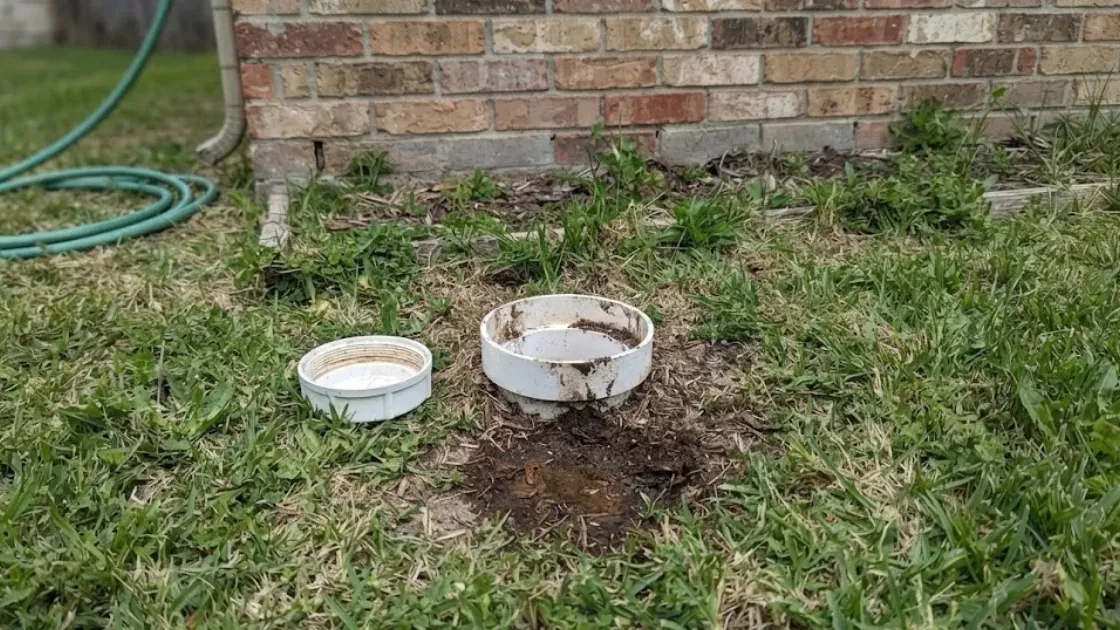
Main sewer line cleaning starts at the cleanout
The cleanout is a capped pipe, often in a basement, crawl space or yard, that gives direct access to the main line. We open it, and what we see tells us a lot. Water standing in the cleanout means the blockage is downstream. A dry cleanout means the problem is upstream, in a branch line.
From the cleanout we run a cable machine toward the street. If it finds roots, scale or a mass of paper and grease, we choose a cutter head or a jetter. We clean the pipe, then pull the cable back and check the flow.
If there is no cleanout, we pull a toilet or use a roof vent. We recommend installing a cleanout afterward because it saves time and money on every later visit.
Sewage in the basement: protect the house while we come
These steps limit contamination.
- Stop all water use, including washing machines and dishwashers.
- Do not use chemical drain cleaner. It may be in the line when we work and is dangerous on skin.
- Keep people and pets out of the wet area. Sewage water carries bacteria.
- Move belongings off the floor if you can do it without entering standing sewage.
- Photograph the backup for your insurer and call us.
What a blocked main line looks like
The pattern across the house reveals the problem.
- The lowest drain overflows firstA basement floor drain or tub is usually the first to show a main line backup.
- Toilets bubble when a fixture drainsAir trapped in the line is pushed to the nearest vent and trap.
- Several fixtures slow togetherOne blocked line affects every fixture that feeds into it.
- Gurgling sounds in the wallsPartial blockage lets air escape unevenly.
- Sewer smell indoorsGas can reach living areas when traps empty or the line backs up.
Common main line blockages and the right cleaning tool
Different blockages need different heads.
| Blockage | Tool | Notes |
|---|---|---|
| Paper and wipes | Cable with a retrieving head. | Wipes labeled flushable often clog lines. |
| Tree roots | Cable with a root cutter, or jetter with a root nozzle. | Roots return unless the entry point is repaired. |
| Grease and scale | Hydro jetter. | Cleans the full pipe wall. |
| Foreign object | Retriever head and camera. | Toys, rags and tools can lodge in a line. |
| Collapsed pipe | Camera, then repair. | A cable will not pass a collapse. |
Which side of the property line is the clog on?
In Lenexa, Johnson County Wastewater serves the public sewer. A floor drain backup should be addressed to a plumber or to the utility at 913-715-8600, and a camera pass tells us which side of the property line the blockage is on.
If the blockage is past your property line, we document it with a video and you can call the utility. If it is on your lateral, we clear it. Either way you know which party is responsible.
A line that must be cleaned several times a year is a candidate for a camera inspection to find the cause. Lenexa has adopted the 2018 International Plumbing Code (IPC), and any repair that follows is done to it.
What affects sewer line cleaning cost
We quote after we know the access and the blockage type.
Water backup coverage is usually an optional endorsement, so check your policy before a loss occurs.
Want your real number? Call (855) 575-2890.
Questions homeowners ask
Yes. Sewer backups are emergencies, and our 24/7 line dispatches crews with cable machines and jetters at any hour.
If it has never clogged, no schedule is needed. A line with roots or heavy grease may benefit from a yearly or twice-yearly visit based on the camera.
Drain cleaning targets a fixture line or branch. Sewer cleaning reaches the main line that serves the whole house.
Stormwater may be entering the sewer through private connections. Johnson County's JoCo Inflow program at 913-715-8550 offers a free evaluation.
Small clogs can be cleared with a hand auger. A main line with roots or a long run needs machines, and a damaged pipe can be harmed by DIY tools.
Yes. Wipes do not break down like toilet paper, even when the package says flushable. Dispose of them in the trash.
Have a repeat blockage and want to stop the cycle? Call and we will recommend a camera and a plan. (855) 575-2890, any hour.