Pump stopped and water is rising: what to do now
Work through these in order and stay out of standing water near outlets.
- Check that the pump is plugged in and that the GFCI outlet or breaker has not tripped. Reset it only from dry footing.
- Lift the float by hand if you can reach it safely. If the pump starts, the float is stuck or misadjusted.
- Look in the pit for debris, gravel or a jammed float arm, and note whether the discharge line outside is frozen or blocked.
- Move boxes, furniture and stored items off the floor, and shut off power to the area if water reaches outlets.
- Call us. Dispatch will tell you whether to bail, what to photograph and how long the crew needs.
Why sump pumps fail when you need them most
A pump sits idle for weeks and then has to run for hours in a storm, which is the hardest thing to ask of a motor. Power loss is the single biggest cause of a flooded basement, because heavy rain and storms often arrive together.
Beyond power, the usual failures are a stuck float, a clogged intake, a worn motor and a check valve that sticks open and sends water back into the pit. Pumps are also sized for a typical day, and a pit that fills faster than the pump can empty it will overflow no matter how healthy the motor is.
We test the float, the check valve, the discharge line and the electrical supply during every visit, because one weak link is enough to flood a basement.
Warning signs your sump pump is on its way out
A pump usually gives hints before it fails outright.
- Loud grinding or rattlingWorn bearings or debris in the impeller make a noise you can hear from upstairs.
- Cycling on and off rapidlyA stuck float or a failed check valve can make the pump short-cycle and burn out.
- Running without pumping waterThe motor spins but the impeller is worn or the intake is blocked.
- Rust, sludge or silt in the pitA pit full of sediment shortens pump life and can jam the float.
- A pump older than about ten yearsMany pumps last roughly seven to ten years, so age alone is a reason to plan a replacement.
Pump types and where each one fits
The right pump depends on your pit, your lot and how much water arrives.
| Type | Strengths | Watch for |
|---|---|---|
| Submersible | Quiet, sits inside the pit, handles most homes. | Harder to service because it sits underwater. |
| Pedestal | Motor above the pit, easy to reach. | Louder and exposed, often shorter-lived. |
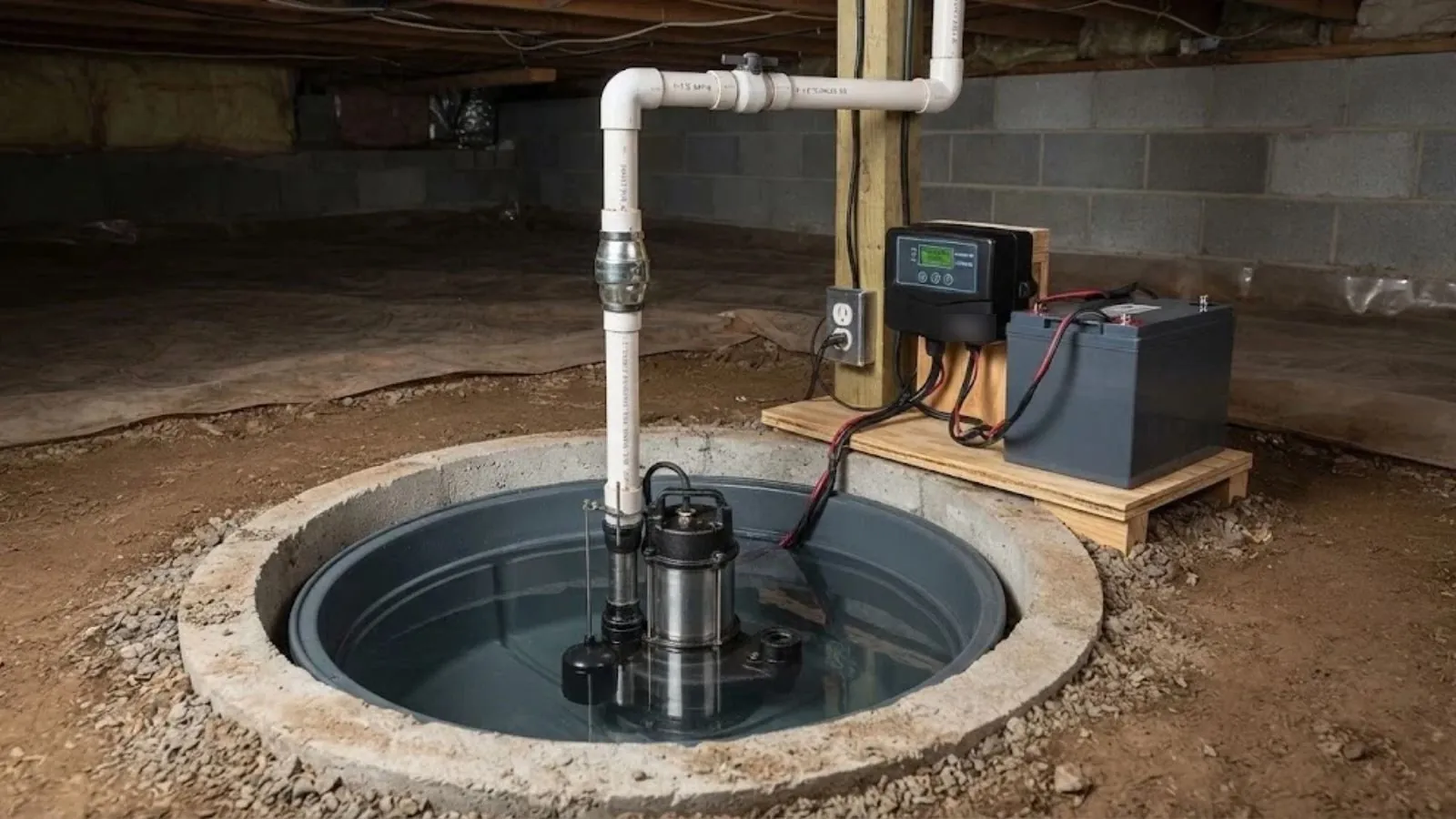
| Battery backup | Keeps pumping when the power fails. | Needs a charged battery and periodic testing. |
| Water-powered backup | Runs from household water pressure without a battery. | Needs adequate water pressure and discharges more water. |
| Combination system | Primary plus backup in one setup. | Needs a pit large enough for both. |
We size the pump to the water coming in, not to the cheapest model on the shelf.
Where the discharge water goes in Lenexa
Johnson County Wastewater runs JoCo Inflow, a voluntary program that has inspected more than 55,000 properties since 1983 and removed about 17,000 stormwater sources connected to the sewer. A sump pump discharge plumbed into the sanitary sewer is one of the connections it looks for.
Rain that enters the sanitary sewer through sump pumps, downspouts and area drains can overload the system and back sewage into basements. The discharge should go outside, away from the foundation and the neighbor's lot, and never into a sewer cleanout or floor drain.
If you suspect your pump is tied to the sewer, call JoCo Inflow at 913-715-8550 for a free evaluation. The program says repairs carry a one-year warranty from the plumbing contractor.
Installing a new sump pit and pump
A new installation starts with the low point of the slab. We cut the floor, dig the pit, set a liner with a sealed lid and run a discharge line to the outside with a check valve. We then test the system by filling the pit until the float trips.
Many Lenexa homes sit on clay-heavy lots and finished basements are common, so we treat a sump system as a long-term fix rather than a quick patch. If groundwater is the issue and water comes through the walls or the floor-wall joint, read about basement waterproofing too.
Lenexa has adopted the 2017 National Electrical Code (NEC), which governs the outlet and circuit a pump needs. If a new circuit is required, an electrician may need to add it. Ask Lenexa Community Development at 913-477-7725 about permits.
What affects sump pump cost
You see the price before we begin.
Water that backs up from a sewer or drain is often excluded from a standard policy unless you carry an endorsement, so check yours before storm season.
Want your real number? Call (855) 575-2890.
Questions homeowners ask
Yes. Pump failures during storms are urgent, and our line is open 24/7. Call, tell us how deep the water is and whether the pump is humming or silent.
If your basement is finished or storms often knock out power, yes. A backup keeps the water moving when the primary pump or the grid fails.
Many last about seven to ten years, depending on how often they run. We check age and condition before recommending repair or replacement.
No. Stormwater in the sanitary sewer overloads it and can back sewage into basements. Johnson County's JoCo Inflow program at 913-715-8550 can help you check.
A high water table, a stuck float or a failing check valve can all cause it. We find which one it is.
A pump swap normally does not. A new pit or electrical circuit may. Ask Lenexa Community Development at 913-477-7725.
Not sure whether yours is healthy? Describe how old it is and what you hear, and we will tell you what we would check. (855) 575-2890, any hour.