Find the source before you pick a fix
Check the outside first
Look at gutters, downspouts and whether the ground slopes toward the house.
Note where it shows inside
Floor-wall joint, mid-wall crack or one corner each point to a different cause.
Note the timing
Water only after heavy rain points to groundwater or surface water. Water in dry weather suggests a plumbing leak.
Test for condensation
Tape foil to the wall for a day. Moisture on the outside of the foil is condensation.
The main options compared
Each fix solves a different problem.
| Solution | Best for | Limits |
|---|---|---|
| Regrade and gutter fixes | Surface water pouring toward the foundation. | Does nothing for groundwater rising from below. |
| Interior drain tile and sump pump | Water at the floor-wall joint. | Manages the water, does not stop it reaching the wall. |
| Crack injection or patching | A single leaking crack. | Other cracks may open later. |
| Exterior waterproofing | Persistent wall seepage. | Requires excavation and is a larger project. |
| Plumbing leak repair | Water in dry weather. | Needs leak detection to find the source. |
Signs that point to each source
Use these clues alongside the table.
- Damp along the floor edge after rainGroundwater pressure is pushing up at the joint.
- A streak under one crackA wall crack is letting water through.
- Water near a window wellA clogged well drain or poor grade is the likely cause.
- White chalky depositsWater has moved through the masonry and left salts behind.
- Moisture that appears regardless of weatherA plumbing leak or condensation is more likely.
Interior drainage and a sump pump: how they work together
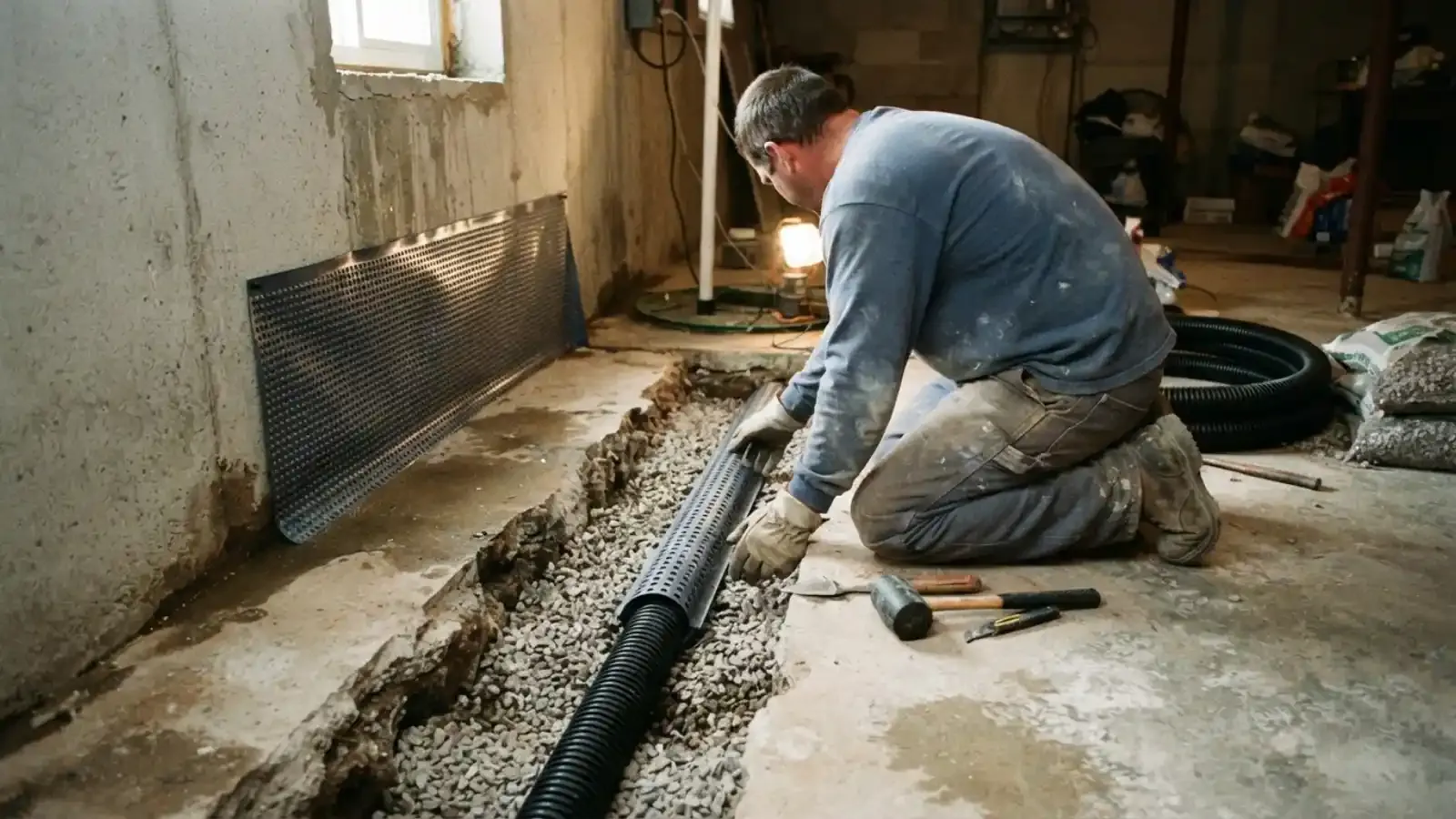
An interior drain collects water at the footing and sends it to a sump pit. A pump then moves the water outside. The system does not keep water out of the wall. It gives the water a controlled path before it reaches the floor.
Battery backup matters. A system that stops when the power goes out will fail in the storm that tests it. We cover installation on our sump pump page.
The discharge must go outside and away from the foundation, which the next section explains.
Drainage you can fix cheaply before spending big
Many wet basements start outside. Gutters packed with leaves overflow beside the foundation, and downspouts that end at the wall pour water right where it does the most harm. Extend downspouts several feet from the house and clean gutters in fall and spring.
Check the grade as well. Soil should slope away from the foundation, and settled backfill near the wall often leaves a low spot that holds water. Adding soil and compacting it is inexpensive compared with an interior system.
Window wells need working drains and covers. A well that fills with rain can leak through the glass or the frame.
Lenexa notes: do not send water into the sewer
Johnson County Wastewater says stormwater from sump pumps, downspouts and area drains that reaches the sanitary sewer can overload it and cause sewage backups. The county's voluntary JoCo Inflow program has inspected more than 55,000 properties since 1983 and removed about 17,000 stormwater sources.
A waterproofing system that discharges into the sewer solves one basement and can contribute to another. Call JoCo Inflow at 913-715-8550 for a free evaluation if you are unsure.
Lenexa has adopted the 2018 International Plumbing Code (IPC), and Lenexa Community Development at 913-477-7725 can tell you whether interior drainage or pump work needs a permit.
Older homes and newer homes
Lenexa was incorporated in 1907, and housing ranges from older neighborhoods to new construction. Listing records place areas such as Whispering Hills in the 1970s and 1980s and Bristol Ridge in the 2010s. Foundation age and drainage design vary, so a fix that works on one street may not suit another.
Older foundations often show cracks and settled grading. Newer ones may have drain tile that has clogged or a pump that is undersized. We look at what your foundation actually has.
Similar variety exists in Overland Park, which we also serve.
A note on mold and health
Persistent moisture can lead to mold growth. We do not make health claims about mold exposure, and a physician is the right person to talk to about symptoms.
What we can say is that drying a wet area quickly, within a day or two, limits growth, and fixing the source is the only lasting solution. A dehumidifier helps with humidity but does not stop a leak.
If you suspect a hidden plumbing leak, call. We find them with specialized equipment and without opening walls where possible.
Questions homeowners ask
It depends on the source. Surface water needs grading and gutter fixes. Groundwater at the floor needs interior drainage and a pump. A single crack may need repair.
A plumber installs sump pumps and interior drainage and finds plumbing leaks. Exterior excavation is a separate specialty.
Not always. Humidity and condensation are separate issues that need ventilation or dehumidifying.
No. Discharge outside and away from the foundation. JoCo Inflow at 913-715-8550 can evaluate your property.
Some work may. Ask Lenexa Community Development at 913-477-7725.
Want help working out where your water comes from? Call and describe what you have seen. (855) 575-2890, any hour.