Why two fixtures clog together
Every drain in a house feeds into a branch, and branches feed the main line that carries waste to the street. A tub and toilet in the same bathroom usually join the same branch within a few feet. A blockage below that point backs water up into the lowest or weakest fixture first.
That is why you see the tub gurgle when the toilet flushes, or hear the toilet bubble when the tub drains. The water and air have nowhere else to go.
If the clog were only in the toilet trap, the tub would drain normally. Two fixtures in trouble tells you to look past the bowl.
Five-minute check to find how far down it is
Test other fixtures
Run a sink on another floor. If it is slow too, the problem is likely in the main line.
Check the lowest drain
A basement floor drain that rises or bubbles points to the main line.
Look at the cleanout
If you have a capped cleanout and can open it safely, standing water means the blockage is downstream of it.
Note the timing
If it only happens in heavy rain, think stormwater in the sewer rather than a household clog.
Clues that tell you more
Different patterns point to different causes.
- Both fixtures slow but drain eventuallyA partial blockage from grease, paper or roots is forming.
- Gurgling from the shower when the washer drainsThe line is carrying air back, which means a restriction.
- Backups that clear and return within weeksA damaged pipe or root intrusion often keeps catching waste.
- Only the lowest bathroom affectedThe main line is blocked and the lowest opening shows it first.
- A sour smell without a visible leakSewer gas may be escaping through a trap that lost its water seal.
What a plumber does at each stage
Here is how the repair usually progresses.
| Finding | What the plumber does | Related page |
|---|---|---|
| Branch line blocked | Cables the branch from a drain or toilet opening. | Drain cleaning. |
| Main line blocked | Cables or jets from the cleanout toward the street. | Sewer line cleaning. |
| Grease or scale buildup | Jets the pipe wall clean. | Hydro jetting. |
| Roots or a damaged section | Runs a camera and plans a spot fix. | Sewer line repair. |
| Frequent repeat backups | Camera inspection and a written finding. | Sewer inspection. |
How a plumber finds the exact blockage
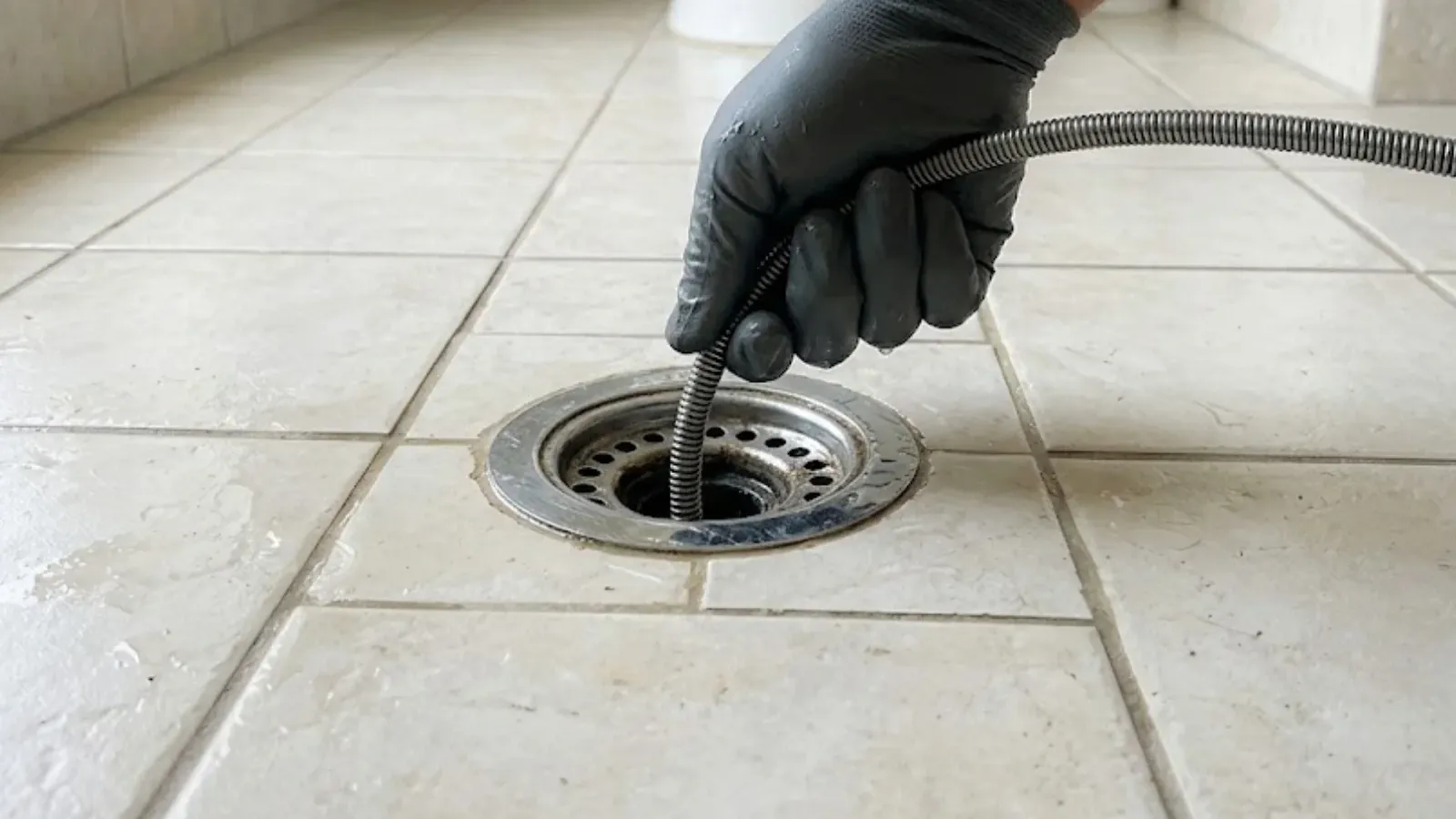
A plumber starts at the closest access point. For a bathroom branch, that may be the tub drain or the toilet opening. If a cable does not reach the problem or the water backs up from the main line, the plumber moves to the cleanout.
A camera follows the cable when the cause is unclear. It shows roots, grease, a sag or a broken joint, and it ends the guessing about which section to fix.
After the line is clear, the plumber runs water through every fixture and watches the drains to be sure the problem is gone.
What not to do while you wait
Avoid running the washing machine, dishwasher or showers, since the water has nowhere to go. Do not pour chemical drain cleaner into a backed-up line. The chemicals sit in the pipe and can burn skin or damage fittings, and they are hazardous for the plumber who arrives next.
Do not keep plunging a toilet that is connected to a blocked main line. Plunging pushes water into the clog and can force sewage out of the lowest drain.
Move belongings off the floor if the lowest drain is rising, and photograph the water for your insurer.
Lenexa notes: the county sewer and rain-driven backups
Johnson County Wastewater runs the public sewer that serves Lenexa and can be reached at 913-715-8600. A camera pass tells you whether the blockage is on your lateral or on the public main, and we provide the footage so you can call the county if it is on its side.
The county also runs JoCo Inflow, a voluntary program that has inspected more than 55,000 properties since 1983 and removed about 17,000 stormwater sources connected to the sewer. If your backups come during heavy rain, call 913-715-8550 for the free evaluation. Repairs carry a one-year warranty from the plumbing contractor, according to the program.
Homes next door in Overland Park share the same county sewer system, and we serve them from the same dispatch line.
Questions homeowners ask
They share a drain branch, and a blockage downstream of both pushes water back into the lowest fixtures. The cause may be in the branch or the main line.
Your lateral from the house to the public main is generally yours. A camera pass shows the location. If it is on the main, call Johnson County Wastewater at 913-715-8600.
We advise against it. Chemicals can damage pipe and hurt anyone working on the line afterward.
Call. Two fixtures backing up often means a main line problem that tends to get worse and can send sewage into the house.
It can, if stormwater is entering the sewer. Johnson County's JoCo Inflow program at 913-715-8550 can evaluate the property.
Not sure whether yours is a branch or main line problem? Call and describe which fixtures are affected. (855) 575-2890, any hour.