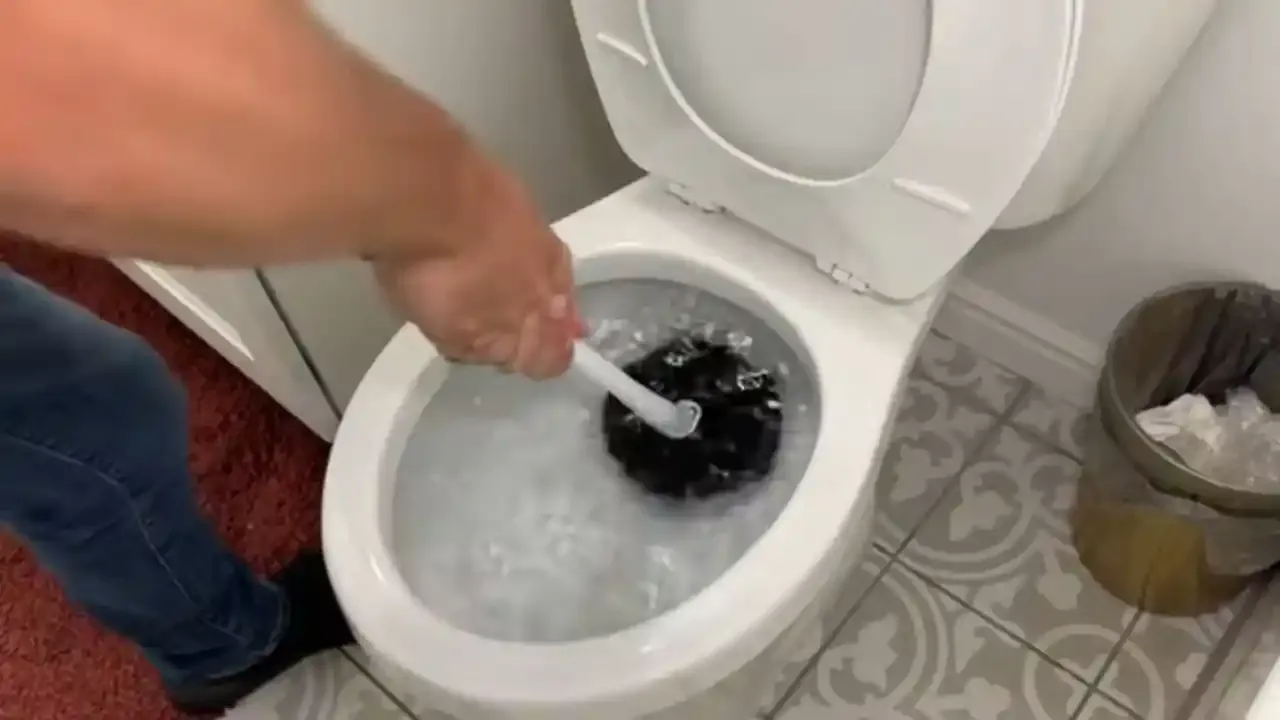
The plunger method, step by step
Stop and contain
Do not flush again. Lift the tank lid and lower the flapper if the bowl is near the rim. Put towels around the base.
Use a flange plunger
A flange plunger has an extra rubber lip that fits the drain opening. A flat sink plunger does not seal well on a toilet.
Plunge firmly
Push down slowly, then pull up sharply, for ten or more strokes. The pull does as much work as the push.
Check the water
If the water drops, flush once. If not, repeat the plunging a few more times before moving on.
When the plunger fails: the toilet auger
A closet auger, also called a toilet auger, is a short cable inside a curved tube that is made for toilets. Feed the tip into the drain, crank the handle and push gently until you feel the clog break or hook. Pull it back out and flush.
Use steady pressure, not force. A tube that scrapes the bowl can scratch the porcelain, and a stuck object may be better removed by a plumber than pushed deeper.
If a child's toy or another solid object is the cause, stop plunging, since it can lodge tighter. A plumber can retrieve it without pulling the toilet in most cases.
Signs the clog is not just the toilet
A toilet clog is local. A main line clog affects more than one fixture.
- Other drains gurgle when you flushAir trapped in the line is pushed to the nearest drain.
- The tub or shower backs up when the toilet flushesBoth feed the same branch, which points to a shared blockage.
- Water rises in a basement floor drainThe main line is likely blocked, and our sewer line cleaning crews handle it.
- The clog returns within daysSomething in the line is catching waste, such as roots or a belly in the pipe.
- A foul smell with no visible leakA blocked vent or a failed seal can cause it.
What to avoid when a toilet is clogged
Some common moves make things worse.
| Mistake | Why it backfires | Better move |
|---|---|---|
| Flushing again and again | Each flush adds water and can overflow the bowl. | Wait, then plunge. |
| Chemical drain cleaner | Harsh chemicals can damage fittings and endanger a plumber who comes after you. | Use a plunger or auger. |
| Flushing wipes | Wipes do not break down like toilet paper, even when labeled flushable. | Throw them in the trash. |
| Forcing a wire hanger | It can scratch the bowl and push the clog deeper. | Use a closet auger. |
| Ignoring repeat clogs | A recurring clog points to a pipe problem. | Ask about a camera inspection. |
Teaching the household what the toilet can handle
Most repeat clogs are a habit problem. Decide as a household that only toilet paper and human waste go down. Keep a small lidded trash can next to the toilet for wipes, cotton swabs and floss.
Check the flush as well. A toilet that needs a second flush every time may have a worn flapper or a low water level in the tank. A quick adjustment can restore flush strength and prevent clogs.
If children use the bathroom, a short talk about what goes in the toilet saves a lot of trouble.
Why toilets clog in the first place
Too much toilet paper is a common cause, as are wipes, feminine products and paper towels. Older low-flow toilets can also struggle with a heavy load, and a partly blocked trap or clogged rim jets reduce flush power.
If a toilet clogs often with normal use, the bowl may be worn out or the drain behind it may be narrowing. A plumber can tell which, and sometimes replacing a poor toilet is cheaper than repeated service calls.
See our toilet repair page for when to repair and when to replace.
Lenexa notes: sewer, rain and who to call
Johnson County Wastewater runs the public sewer that serves Lenexa and can be reached at 913-715-8600. Your lateral from the house to the public main is generally your responsibility, and a camera shows which side a blockage sits on.
If toilets and drains back up mostly during heavy rain, stormwater may be entering the sewer. The county's voluntary JoCo Inflow program has inspected more than 55,000 properties since 1983 and removed about 17,000 stormwater sources. Call 913-715-8550 for the free evaluation.
The same advice applies to homes just east in Overland Park, where we also respond to toilet and sewer calls. Fixture and drain work in Lenexa follows the 2018 International Plumbing Code (IPC) that the City has adopted.
Questions homeowners ask
Try several rounds of ten strokes with a flange plunger. If the water does not drop, or other drains are slow, call.
Warm water can help with paper. Boiling water can crack porcelain, so avoid it.
A squirt of dish soap with warm water can lubricate a paper clog. It will not clear a solid object.
The blockage is probably in a shared line. Stop using water and call for drain cleaning.
It can. Rain may enter the sewer through private connections. Johnson County's JoCo Inflow program at 913-715-8550 offers an evaluation.
Not sure whether it is the toilet or the main line? Call and tell us what drains are affected. (855) 575-2890, any hour.